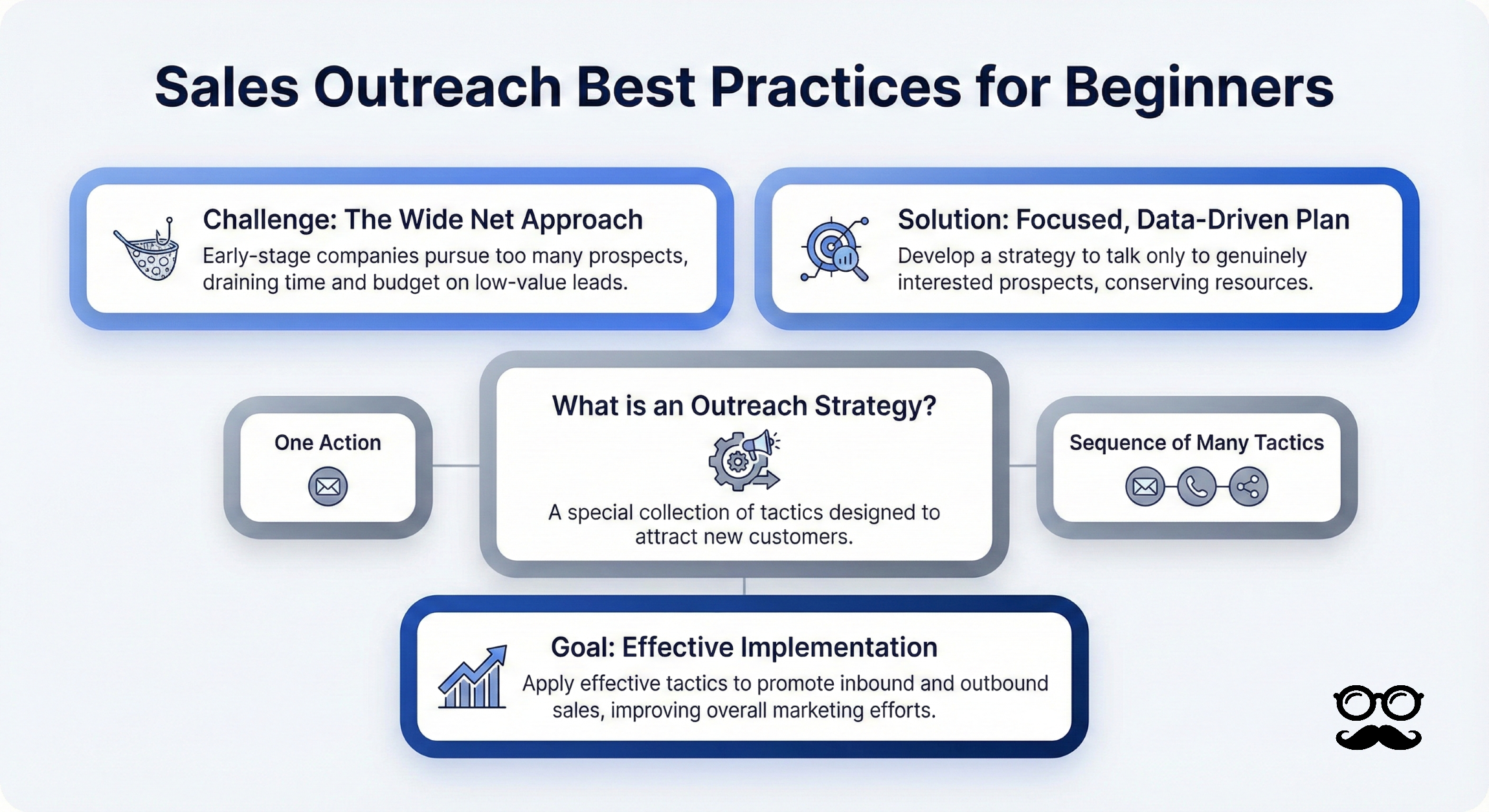
Early-stage companies often cast too wide a net when defining their ideal customer. Pursuing every logo that looks impressive on paper drains time, budget, and energy—especially when those prospects will never buy or churn after a single deal. A focused, data-driven outreach plan keeps your team talking only to people who genuinely need and value your solution.
At that time, your opponents are joining the market and gaining contact with large and business clients, which is why developing an outreach strategy is important. In this post, we’ll outline outreach strategy and demonstrate how you can build your own.
What is an outreach strategy?
An outreach strategy is a special collection of tactics designed to attract new customers. Depend upon the complexity of your trades business, your outreach strategy can consist of one action or a sequence of many tactics.
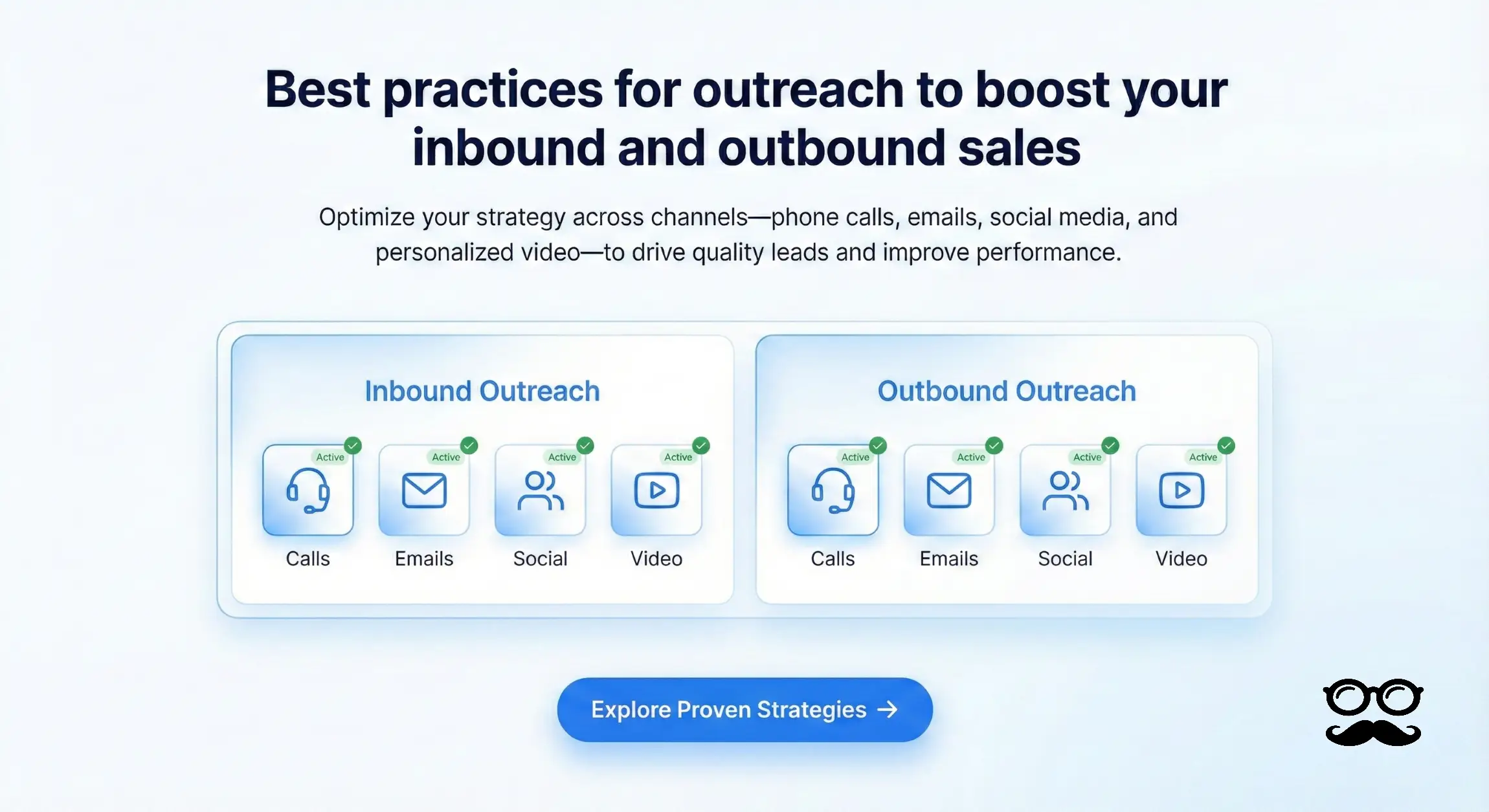
Apply these effective outreach tactics to promote inbound and outbound sales and better follow outreach marketing and selling.
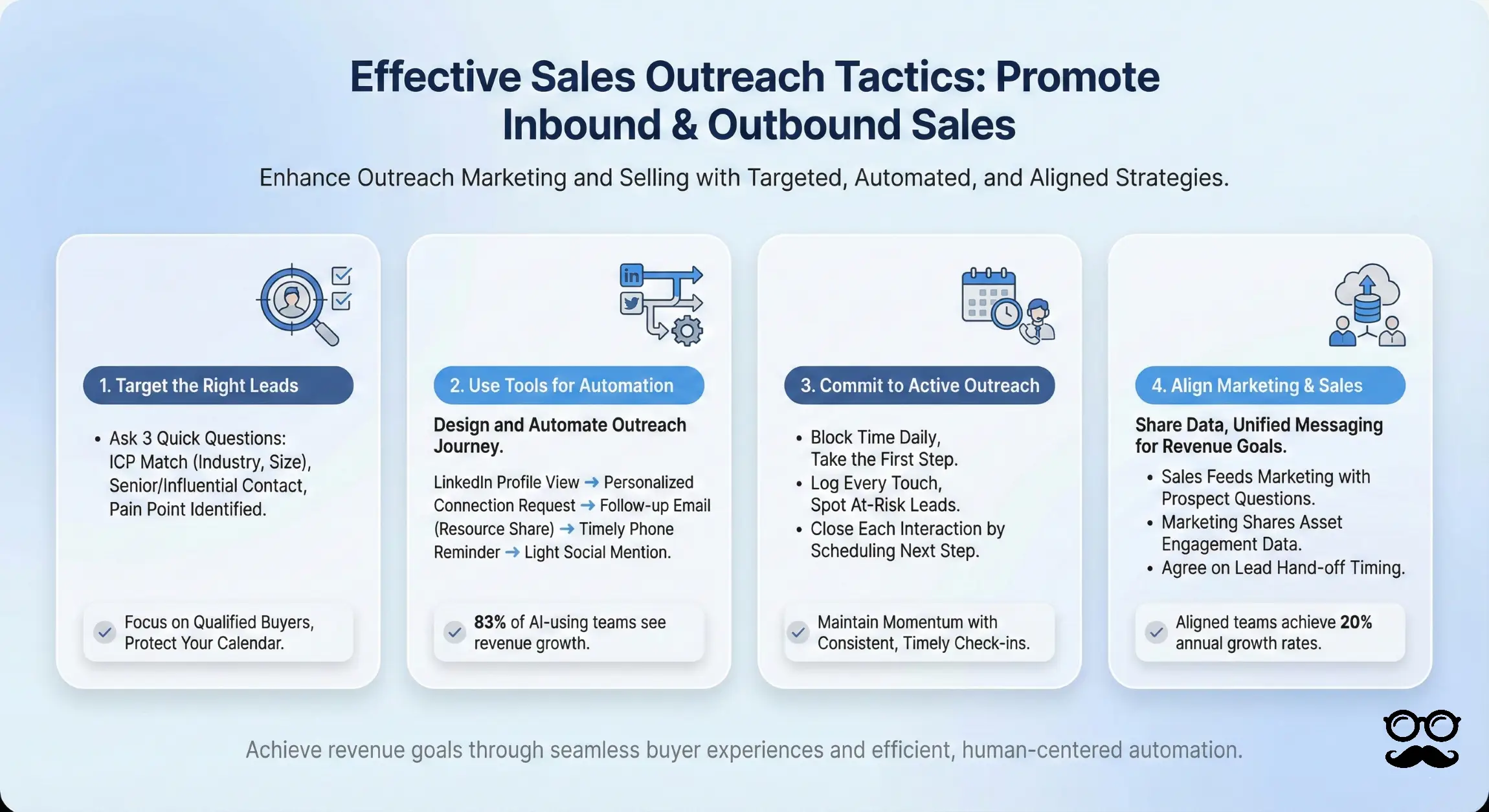
1. Target the right leads
Spray-and-pray outreach burns hours and morale. When every prospect looks like ‘a maybe,’ your pipeline fills with people who will never convert. Stay disciplined by asking three quick questions before you pick up the phone or hit ‘send’:
- Does this company match our ideal customer profile (industry, size, tech stack)?
- Is the contact senior enough—or influential enough—to champion our solution?
- Have they shown a pain we can solve right now?
If the answer to any question is ‘no,’ move on. Protecting your calendar from unqualified activity frees you to spend time with buyers who can actually say yes.
Few sales companies cast too wide of a net in an attempt to attract as many B2B sales candidates as possible. Unluckily, this strategy loses worthy time and money. Reps might have low reliance when trying this strategy, as going after any lead ends in decreased productivity. While they are continually engaged with multiple contacts, they have an improved percentage of deals that will never close. This just makes their numbers look bad; it gives them a bad feeling.
By first planning an ideal customer profile, sales companies can use advanced targeting tools to decide who the right people to target are. Then, they can use qualifying topics to zero in on these ideal candidates quickly.
2. Use sales outreach tools for automation
Modern automation platforms let you design an entire outreach journey once and run it safely at scale, with 83% of AI-using teams seeing revenue growth:
- LinkedIn profile view ➜ personalised connection request (noting that 42% of sales professionals report social media delivers the highest cold outreach response rates)
- Follow-up email that shares a helpful resource
- Timely phone reminder for high-intent prospects
- Light X (Twitter) mention or DM to stay on their radar
Automating these micro-tasks removes busywork so reps can concentrate on high-value conversations, not tab-hopping administration.
Email and call sequencing is another aspect of outreach automation that cannot be overlooked. To create a consistent experience across candidates, sales representatives should use appropriate sequencing tools to send emails and create call tasks at the right time in the buyer’s journey. These distributions can be customized based on verticals, industries, or product offerings.
3. Commit to active outreach
Active outreach means taking the first step—every single day. Block time on your calendar and protect it like a client meeting. During that window:
- Call or message prospects who have shown recent interest but haven’t heard from you in a week.
- Log every touch so you can spot when a lead is at risk of going cold.
- Close each interaction by scheduling the next one. Momentum is your friend; let it work for you.
Fix reminder tasks for email and ring follow-up to avoid dropping an essential touchstone with a qualified lead. Avoid letting those small things, like a quick email, fall through the cracks. Sales representatives are also required to stay heavily engaged with their best leads by checking in daily or just as frequently as that lead requests. An extra important part of active outreach is showing that you’re listening. Calling back a lead at the right time tells them that you’re paying attention
4. Align marketing and sales outreach
Marketing and sales share the same goal—revenue—so their data can't live in silos, with aligned teams achieving 20% annual growth rates. When both teams swap real buyer insights, each touchpoint feels more personal and relevant.
- Sales feeds marketing the questions prospects ask on calls.
- Marketing shares, which assets prospects actually open and click.
- Both teams agree on when a lead moves from automated nurture to one-to-one conversation.
Aligned messaging turns every campaign, post, and call into a seamless buyer experience.
For instance:
Salespeople can enhance sales outreach by perceiving the kind of marketing emails that candidates have opened most recently.
Marketing can promote their own outreach by knowing the kinds of topics that direct customers and candidates have been asking about recently.
Salespeople should have a way to tell marketers when to remove consumers from the marketing cycle to let salespeople either handle communication or resolve that the lead isn't qualified.
Ready to take the next step? Start your Free Trial or Book a Demo to target the right leads, automate follow-ups, and build consistency from day one.
Start Free TrialFrequently asked questions
What are examples of outreach strategies?
Examples of effective outreach strategies include:
- Targeting the right leads by defining your Ideal Customer Profile (ICP) and qualifying prospects early. This ensures reps spend time only with buyers who actually need your solution.
- Using automation tools to streamline repetitive tasks like sequencing emails, scheduling follow-ups, viewing LinkedIn profiles, and sending connection requests.
- Practicing active outreach by consistently reaching out to prospects, logging every touchpoint, and keeping momentum with daily follow-ups.
- Aligning marketing and sales so messaging is consistent, data flows between teams, and every buyer touchpoint feels coordinated and relevant.
What are the top outreach strategies for beginners?
The top outreach strategies for beginners include:
- Target the right leads
Focus only on prospects that match your ICP, can influence a buying decision, and show a real pain point. This prevents energy from being wasted on unqualified leads. - Use sales outreach tools and automation
Automate micro-tasks like connection requests, sequences, call reminders, and follow-up emails. This keeps reps consistent and frees time for real conversations. - Commit to active outreach daily
Block time for calls and emails, engage with leads frequently, track every interaction, and schedule the next touch before ending the current one. - Align sales + marketing outreach
Share insights between teams—sales provides prospect questions; marketing provides engagement data. Unified messaging creates a smoother buyer experience.
What is the 70/30 rule in sales outreach?
The 70/30 rule means your prospect should do about 70% of the talking while you speak for only 30%. By asking thoughtful questions and listening first, you build trust faster and uncover the real problems your solution can solve.
How does the 2-2-2 follow-up rule work?
The 2-2-2 rule is a simple follow-up structure: contact the prospect again after 2 days, then 2 weeks, and then 2 months. Each follow-up should provide something useful—like an insight, resource, or short reminder—rather than repeating the same message.
What does the 3-3-3 rule mean for my outreach plan?
The 3-3-3 rule guides how you organize your outreach: send three key messages, target three ideal buyer segments, and use three communication channels (such as email, LinkedIn, and phone). This balanced approach increases visibility and boosts engagement across touchpoints.
What does the 10-3-1 formula tell me about activity goals?
The 10-3-1 formula is a simple activity benchmark: for every 10 qualified leads you contact, you can expect around 3 meetings and 1 closed deal. Tracking these ratios helps you forecast results and adjust your outreach strategy based on real performance.
[author-box]
Related Articles

Use Meet Alfred to get customers to find you!
Speak to one of our Automation Experts today
Start seeing results!