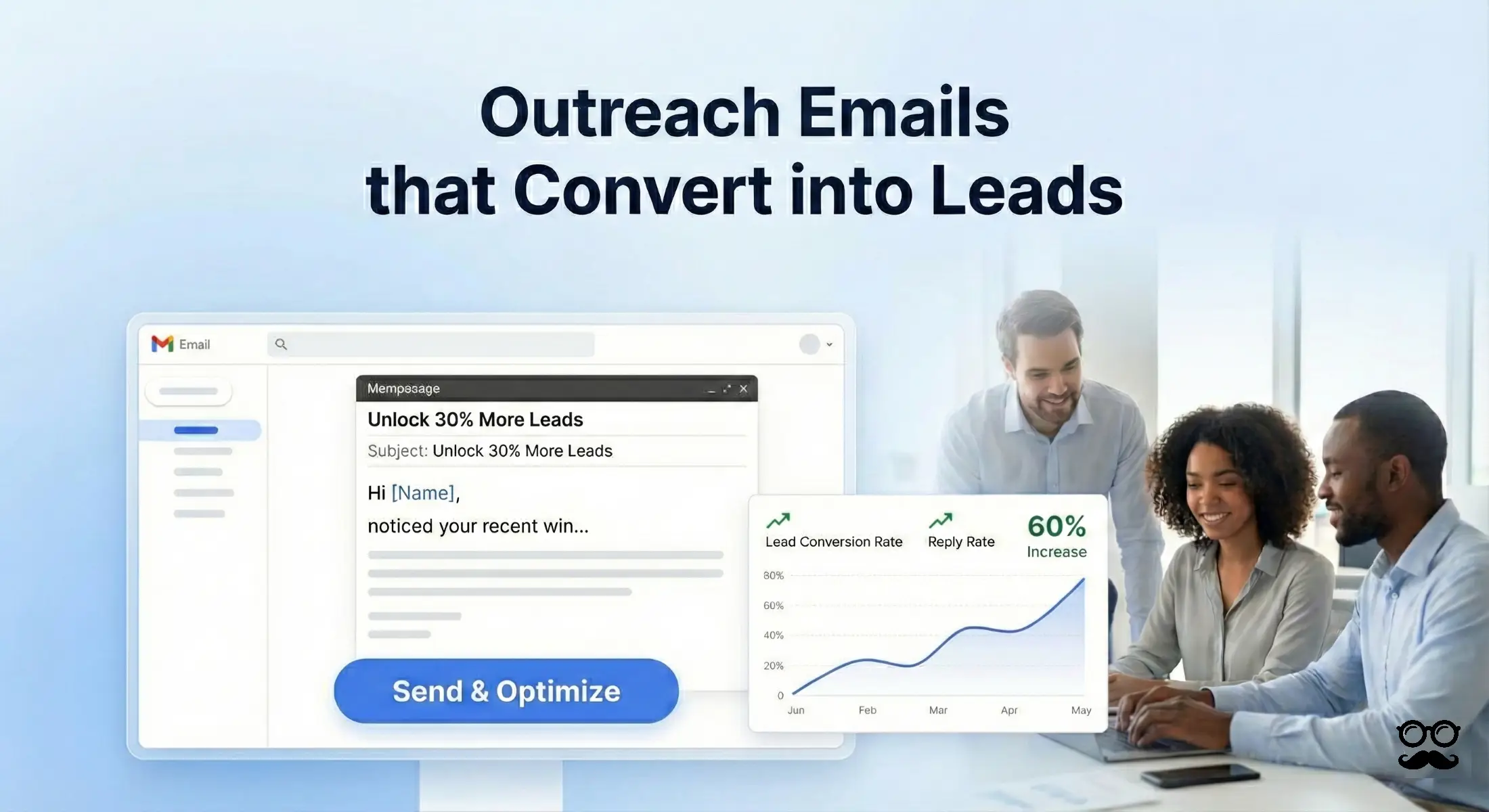
How do I write an outreach email template that gets replies?
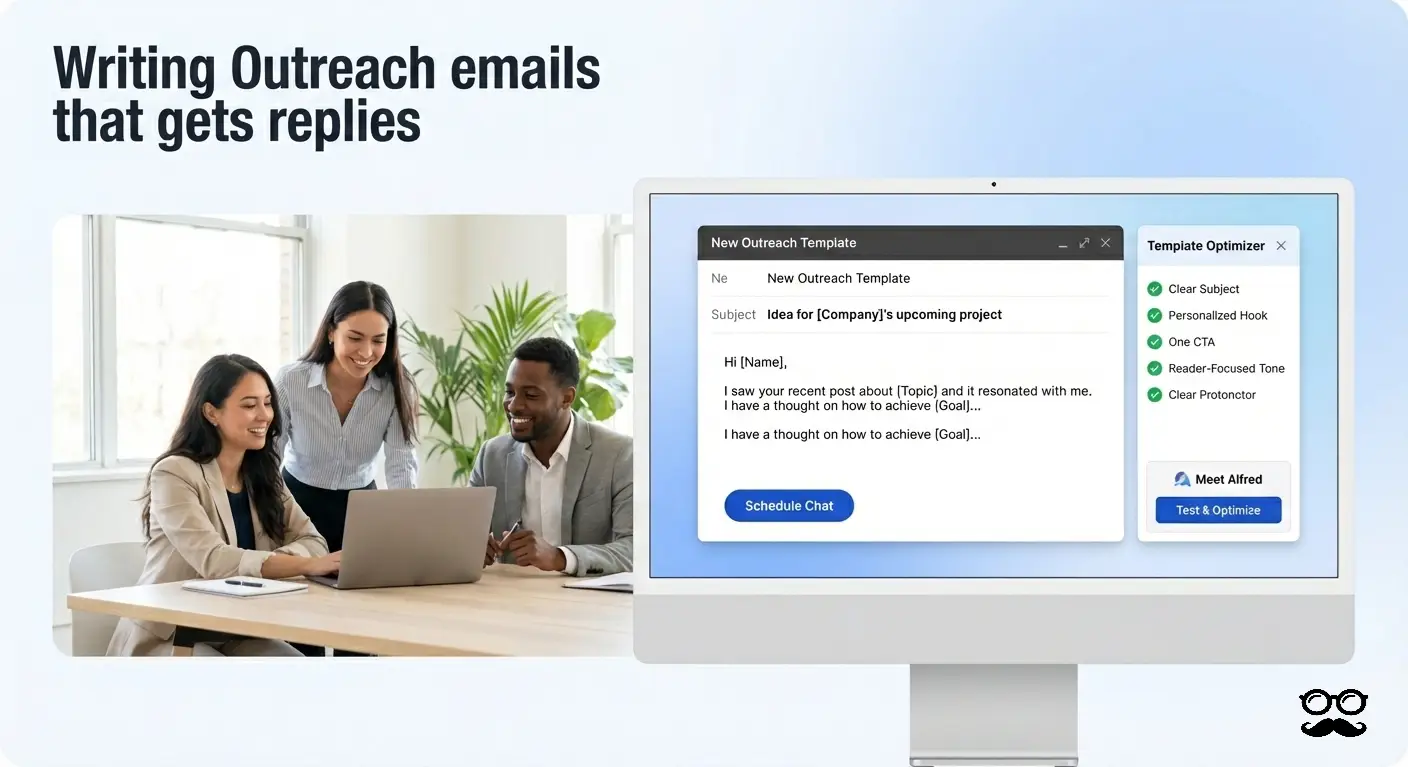
Start with a subject line that’s clear and relevant. In your opening, reference something specific about the recipient. Keep your message concise, focus on one call-to-action, and always personalise. Tools like Meet Alfred help you test and optimise your templates for better results.
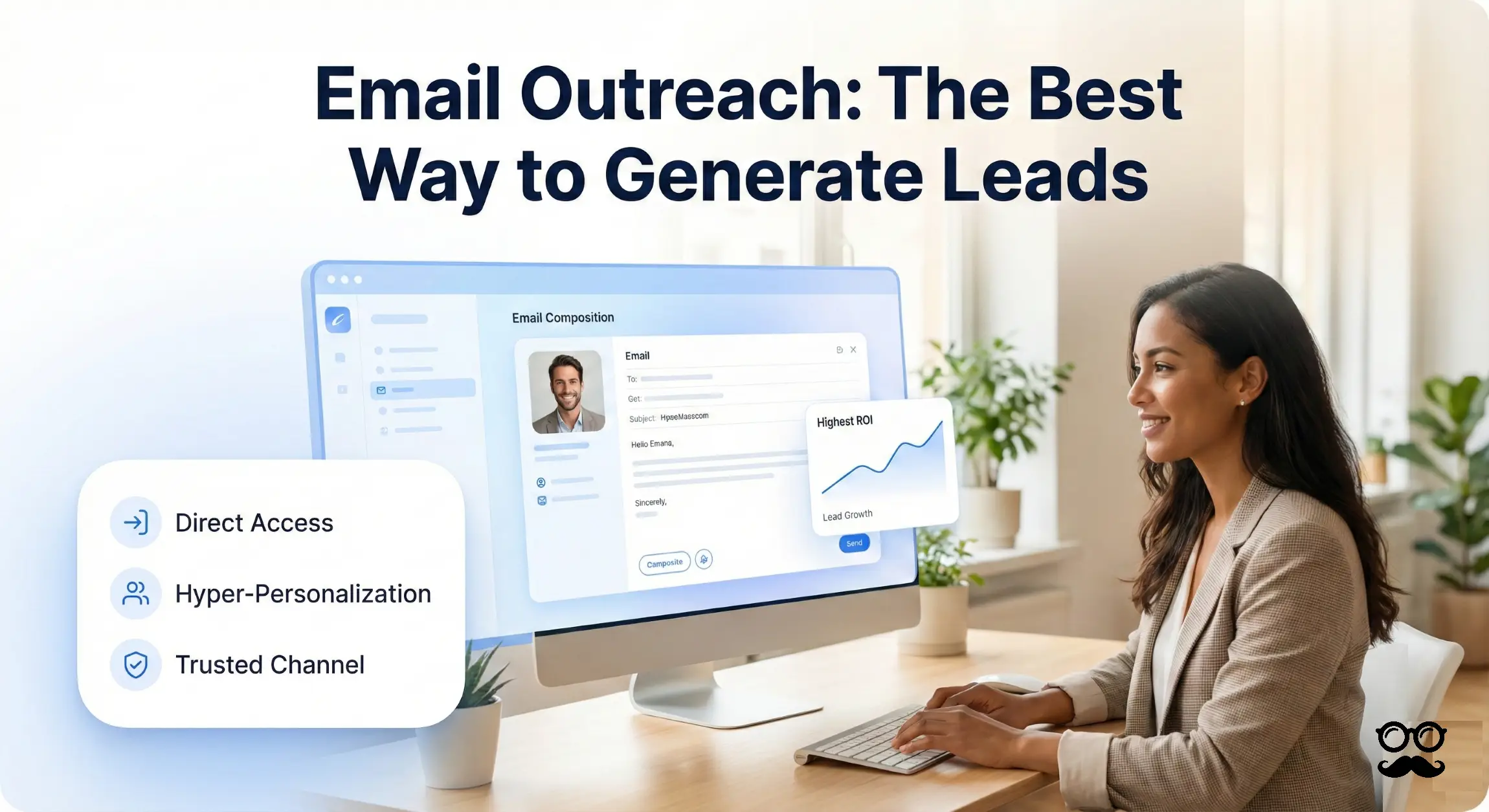
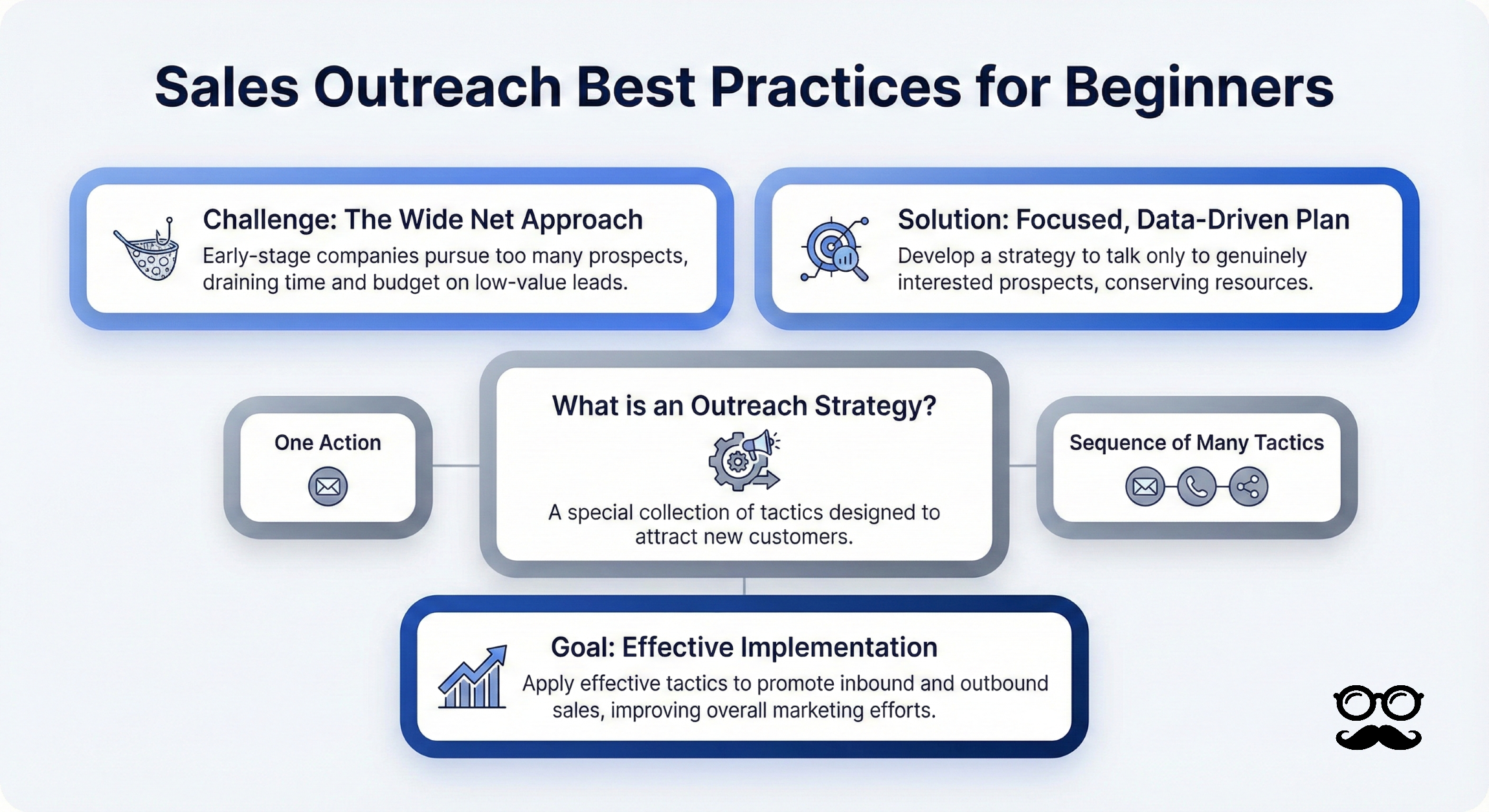
Email outreach is one of the most common ways that is used to reach out to consumers. With the help of an email, you can push additional consumers to digitize and adjust to a new world of digital sales. Email marketing is used by every small, medium or large scale business. Now almost every company is trying email outreach to obtain customers and increase brand awareness.
Skip the self-promotion in your opening lines. Make every email about the reader—reference their role, recent wins, or pain points—and keep the tone relaxed yet professional so it feels like a one-to-one conversation.
Six easy steps to start your email outreach

Any company is different but the below email outreach and best practices will be a good starting point for you.
1. Understand the Process:
Email outreach succeeds when you follow a simple three-step framework:
- **Identify **qualified prospects who match your ideal customer profile.
- Craft personalised messages that speak directly to their challenges.
- Test and optimise your cadence until you discover what wins the most replies.
Anything else is just “spray and pray”—and that approach no longer works.
These are popular and reliable techniques that vary depending on the industry that you are working in. If you are in a B2B market then you have to go for a different method that applies the same technique when you are in the B2C market. But the common rules of putting down email templates hold on the occasion that you will be using them. But there are always some risks in these platforms that can't assure you that you can become successful by using email marketing. This is the reason why companies run so many experiments, to optimize the strategy as much as possible to ensure the best possible results.
2.How to Make your Company Successful:
To make sure you become successful in the industry you have to use email outreach effectively so one needs to understand the audience. That is the most crucial thing you need to understand that you need to understand about the consumers. Their consumption pattern and behaviour.
You will have to create a target that you want to fulfil within a limited time.
But if you haven’t created a list yet then it is the most essential thing to do. Also, don't forget to create a client's persona for the business, this will result in saving a lot of time and effort on your behalf.
The most important questions that you should be concerned about while thinking of your buyers are
- The company size you are going after?
- The buyer's demographic locations?
- What are the consumption patterns of the buyer?
- Who are your biggest competitors in the market?
Some of these questions are easily answerable while others expect additional research and investigation. They will provide the most adequate results to your questions.
These may take a scientific approach to test out what works best. Markets keep on changing every day so you have to keep an eye on the market.
3. Increasing the Open Rate:
Subject lines make or break your open rate.
- Lead with a clear benefit or spark curiosity—ditch filler phrases like “I hope this email finds you well.”
- Keep it under 45 characters so it displays cleanly on mobile.
- Speak to one specific outcome the reader cares about, e.g., “Cut onboarding time by 30%?”
- A/B test at least two subject lines per campaign to learn what resonates fastest.
Remember, your readers are busy; the line must be compelling, engaging, and direct to earn the click. The most effective way to do so is to start with an uncommon, but trending sentence and leave it there with an......ellipsis.
In an email, outreach tries to prevent difficult questions as much as possible. That implies not inquiring anything from the consumers when they are this early in the sales process. You should try to make the consumers comfortable and give them enough time to understand the process. Some extra information to enable you to compose incredible subject lines.
- Be small and precious
- Be apparent
- Develop interest
- Make it seem like everyday communication, like something they would receive and respond to
- Employ volumes
- Leave a question
- Customize the emails by using the company's name.
If you want to generate the best results with email outreach, it is significant to A/B test your Headlines, for the articles. Also, try to prevent composing articles in all caps or using exclamation marks — if these are used very often the consumer may feel it is unprofessional while reading.
4. Agree on the Purpose of Your Email Campaign:
What is the 30/30/50 rule for cold emails?
The 30/30/50 rule suggests sending 30% of your emails as initial outreach, 30% as first follow-ups, and 50% as second or later follow-ups. This approach emphasises the importance of persistence and multiple touchpoints to boost response rates.
In maximum sales and marketing funnels, there are three stages:
- Top of the Funnel (TOFU) — This is the stage where one can bring awareness to the market regarding a specific brand or a product. You have to make the buyers aware of the products and services that you are offering.
- The Call to Action (CTA) here you can ask them to join the webinar. And don't talk about the products that you offer in the webinar but instead, try to give some informative knowledge to the consumers. This enables the possibility to observe you as a trusted company and build brand knowledge.
- Middle of the Funnel (MOFU) — Here the consumers are assumed to be aware of the products and services that are offered by your business. So the main objective is to sell the products.
With these techniques, you can start building trust and loyalty among the customers. Even if the consumers have not purchased your products, they will still get to know about your brand. Then the popularity of your brand will also increase which will eventually result in more sales.
5. The Follow-Up:
Follow-ups convert curiosity into conversations. Keep them purposeful rather than pushy:
- Space them out— two emails per week is plenty for a cold prospect.
- Layer value in every message: a quick tip, resource, or success story.
- Switch the call-to-action if you didn’t get a reply—try asking a yes/no question or offering a 5-minute chat.
- Personalise each nudge; even in templates, mention something relevant you’ve observed since your last email.
If this is a fully new consumer and no one from your corporation has ever talked to the prospect, then it is best to not send more than two sales emails in one week.
Here are some guidelines for the follow-up:
- Do not use d emails on Friday, or a day or two before a big vacation or a festival.
- Suitable follow-up cycles should comprise three to six outreach emails. Not more than that is required.
- Utilize various CTAs and give in various follow-up emails.
6. Measure To Improve:
Track the numbers that actually move revenue:
- Open rate – Measures how effectively your email subject lines and previews spark curiosity, with B2B emails averaging 39.5% open rates.
- Click-through rate – Shows whether readers find your content compelling enough to learn more.
- Leads generated – Indicates how well your outreach resonates with the right audience.
- Meetings booked – Tracks how frequently prospects advance to a high-value conversation.
- Conversions – Helps you see which messages ultimately drive revenue.
Test your emails and approaches authentically and iteratively. Pay close attention to buyer responses, then refine your outreach tactics to steadily improve these critical metrics.
You can generate remarkable knowledge like how many times your emails have been opened. You can also track if it was a real consumer and if they have still subscribed to your emails then you can send further acknowledgement notifications for availing your products and services.
If they have any suggestions or advice that they want to provide you be sure to acknowledge that advice and try to implement them in your business to increase the customer base. Consumers like it when a brand follows their suggestions and take the necessary actions that are required.
Ready to start writing outreach emails that convert into leads?
Start Free TrialFrequently asked questions
How do I write an outreach email template that gets replies?
An outreach email template that gets replies is clear, personal, and focused on the reader’s problem. Start with a subject line that sets a simple, honest expectation. Open with a short personal hook (who you are and why you’re reaching out), show that you understand their situation, and offer one specific benefit or next step instead of a long pitch. Close with a low-friction call to action, like asking a quick question or suggesting a short call. Tools like Meet Alfred help you test subject lines, personalise at scale, and track which templates actually generate replies.
What is the 60/40 text-to-image rule in email design?
The 60/40 text-to-image rule means your email should be roughly 60% text and 40% images. Keeping more copy than visuals helps your emails load faster, look good on mobile, and avoid spam filters that often block image-heavy messages. Use images to support your main point—not replace it—and make sure the key message is still clear even if images don’t load.
What is the 30/30/50 rule for cold emails?
The 30/30/50 rule is a simple way to think about where your effort should go with cold emails: 30% into building the right prospect list, 30% into writing a clear, relevant message, and 50% into consistent follow-ups. In other words, most results come from thoughtful follow-up, not just the first email. A structured follow-up sequence gives people multiple chances to reply when the timing is right.
How do I create and save an email template in Meet Alfred?
To create an email template in Meet Alfred, log into your account and open the area where you manage your email campaigns or sequences. Draft your outreach email with any personalisation fields you need (like first name, company, or role), then save it as a template so you can reuse and refine it across multiple campaigns. This lets you keep messaging consistent, run tests on different versions, and quickly launch new outreach without writing from scratch each time.
[author-box]Related Articles
Use Meet Alfred to get customers to find you!
Speak to one of our Automation Experts today
Start seeing results!